

The vast majority of this week's news has been published. In case you missed it:
- A portfolio change and performance update.
- Spotify Detailed Earnings Review
- Nu Detailed Earnings Review
- Cloudflare Detailed Earnings Review
- Sea Limited Detailed Earnings Review
- On Holding Detailed Earnings Review
- Hims Detailed Earnings Review
- AppLovin Detailed Earnings Review
- Shopify Detailed Earnings Review
Next week, I will publish detailed earnings reviews for Starbucks and Cava.
1. Cava (CAVA) – Brief Earnings Snapshot
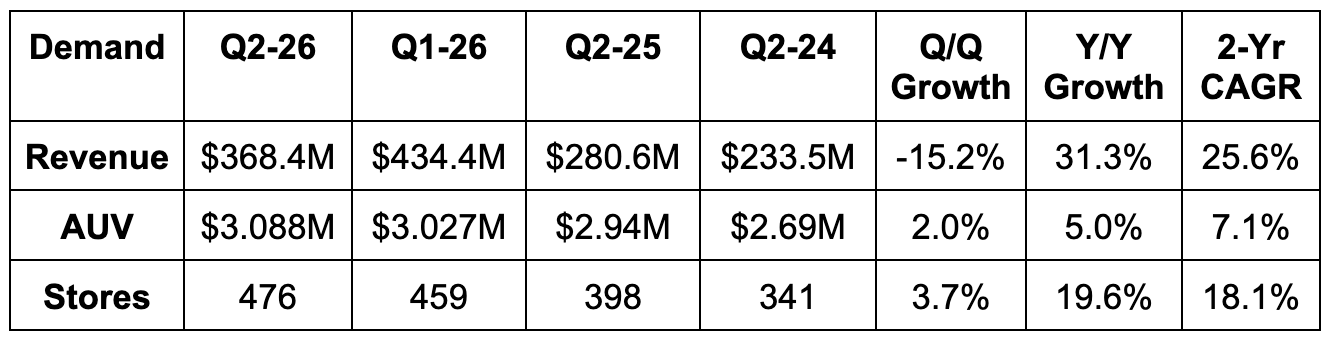
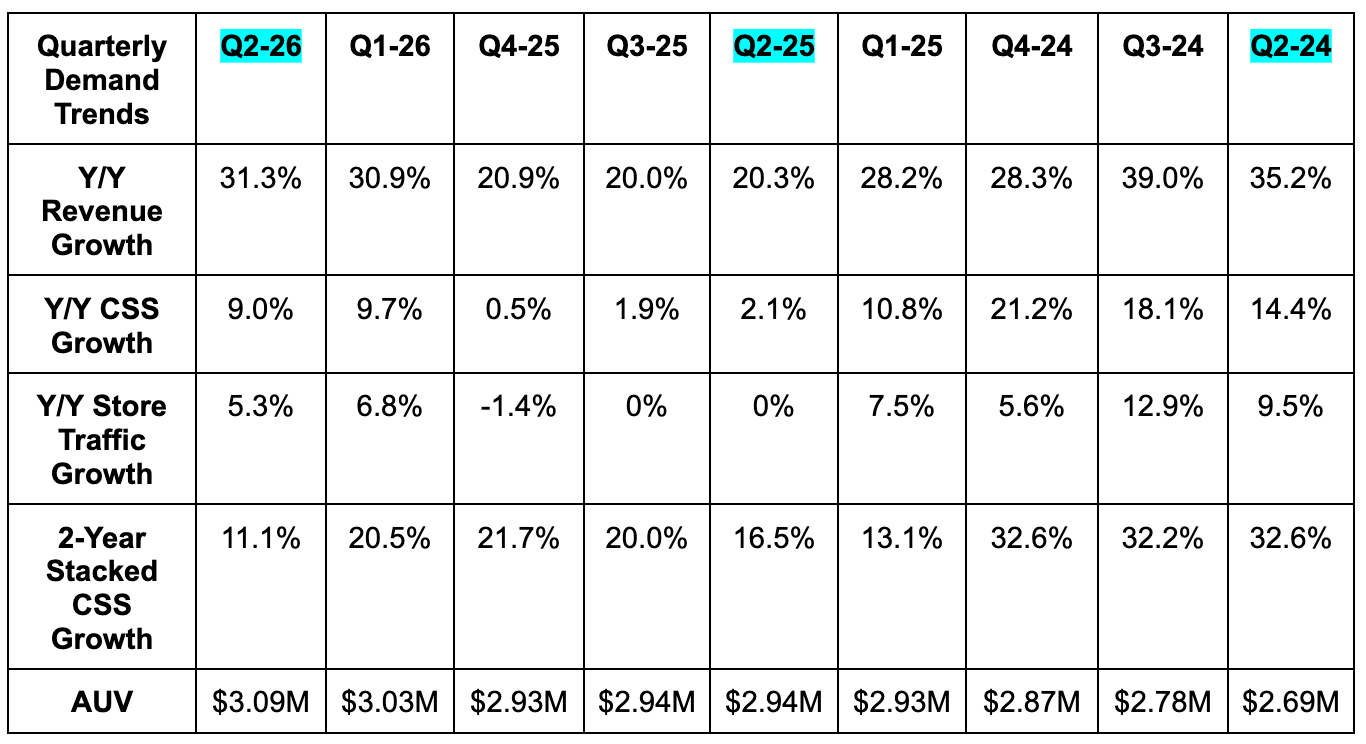
a. Demand
- Beat revenue estimate by 2.3%.
- Beat the 7.5% comp store sales (CSS) growth estimate with 9.0% growth. This includes 5.3% traffic growth.
b. Profits & Margins
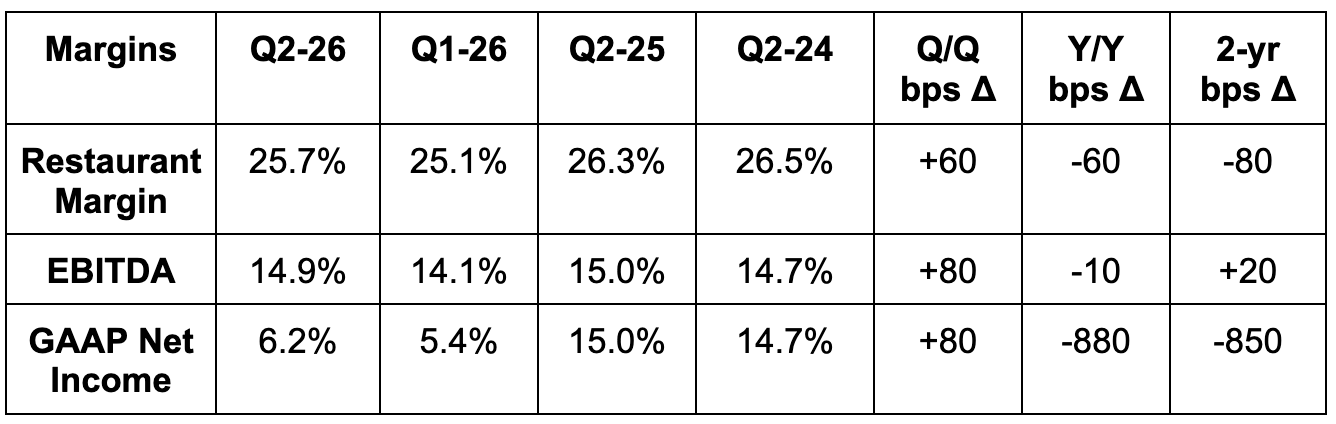
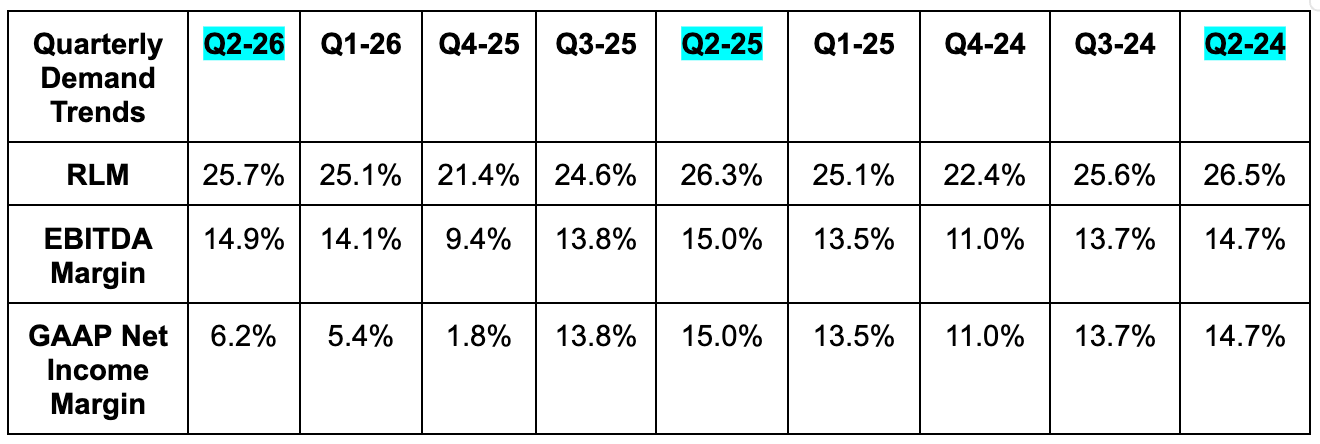
- Slightly missed 25.8% restaurant-level margin (RLM) estimate by 10 basis points (bps; 1 basis point = 0.01%).
- Beat EBITDA estimate by 4%.
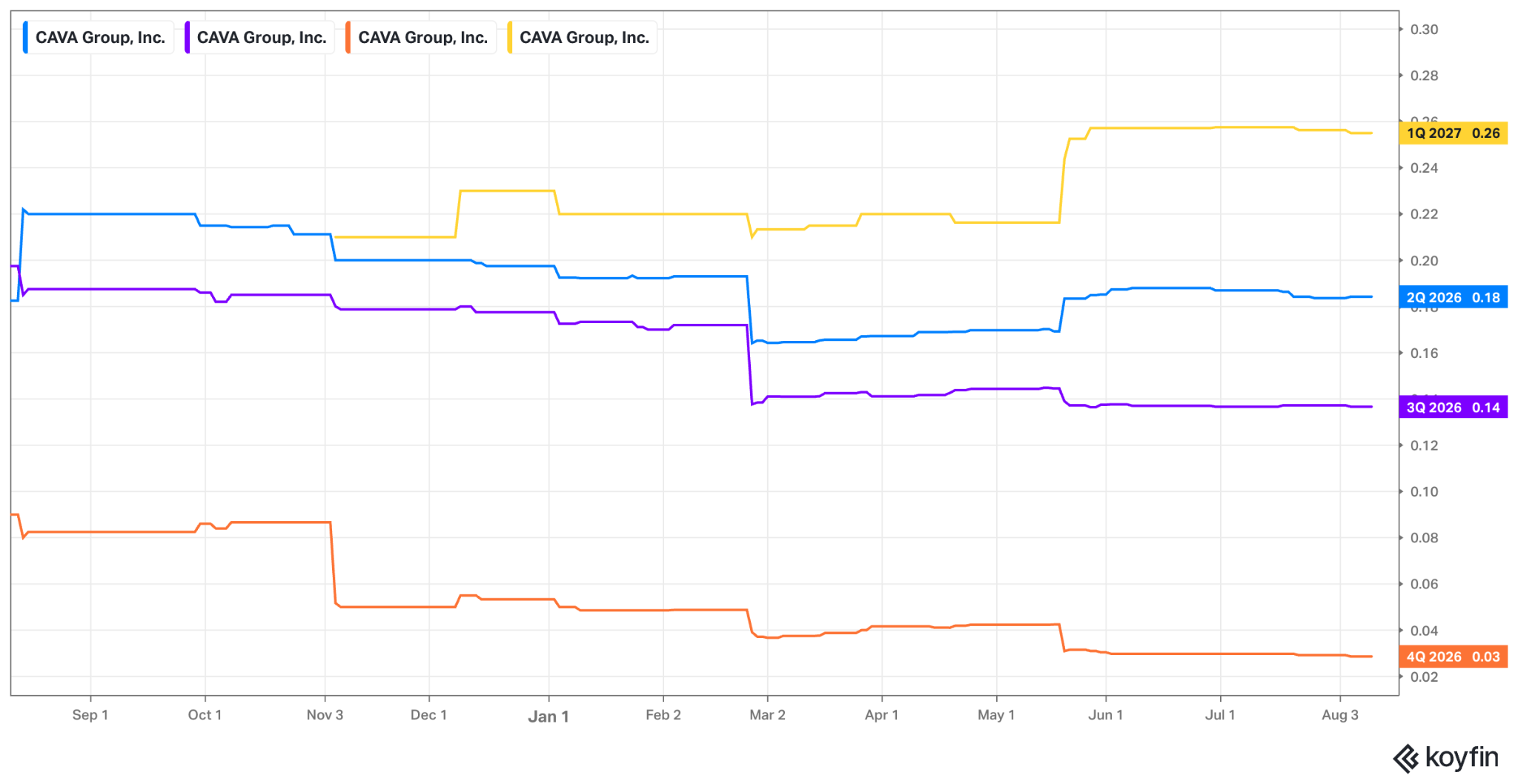
- Beat $0.18 GAAP EPS estimate by $0.02.
- Beat $12M FCF estimate by $17M.
c. Balance Sheet
- $322M cash & equivalents.
- 0.1% Y/Y dilution.
- No debt.
d. Guidance & Valuation
- Cava reiterated annual 5.5% CSS growth, which missed 6.5% growth estimates.
- Reiterated annual $186M EBITDA guidance, which missed estimates by 2.4%.
- Reiterated 24% RLM, which slightly missed 24.1% margin estimates.
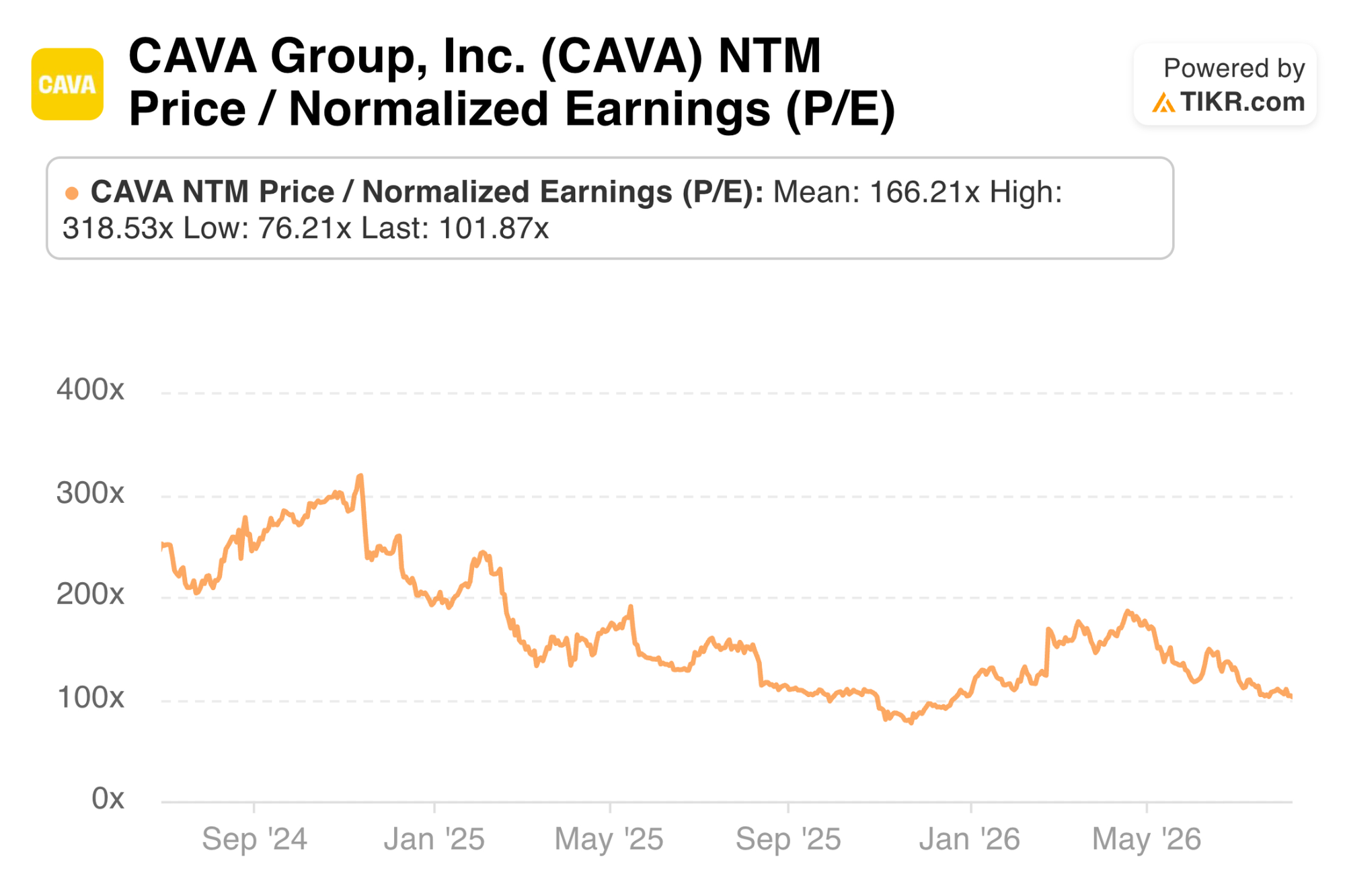
CAVA trades for 102x EPS. EPS is expected to grow by 2% this year and by 38% in each of the following 2 years.
2. Mercado Libre (MELI) – Subtle Yet Encouraging Hint
In Brazil, Mercado Libre is raising its shipping fees by 4% on August 24th. This is only for goods over R$19 and shows a small sign of easing pricing battles and general competitive pressures in Brazil. At the same time, they're also getting even more aggressive with pricing and seller incentives as of their most recent earnings call this week, but it's good to see them make a decision like this amid all of the Brazilian moat fears.
It's tweaks in the operating model like this one that seem small and subtle but can make a big difference in terms of delivering incremental profit dollars thanks to MELI's gigantic base.
That's the beauty of this business model. They have a lot of control over their P&L and can choose to generate more profit whenever they want to. Right now, that's not the priority. As investment levels normalize and the team more evenly balances growth with margins once again, we should be in for a few years of rapid bottom-line compounding.
Read my detailed earnings review from last week here.
3. Meta (META) – Open Source
In big news for open source models, Meta is making its newest, highest-performing models open source. The change occurs as Zuckerberg posted a new article calling for regulation to favor intelligence that is open and distributed, rather than concentrated in two companies.
The new models being open sourced aren't quite as good as Fable 5 or other leaders, but it's a lot closer than what U.S. open source has had to offer until now. There is a real scenario where Chinese open source models get banned by the west and are no longer alternatives to Claude and ChatGPT. Meta's, on the other hand, will not be banned, marking a more durable competitive threat without potential regulatory help for Anthropic and OpenAI. Interesting to see the company move from an open source philosophy to closed source and then back to open. Sign of the times.
4. Nvidia (NVDA) – Financing
During the week, Nvidia signed 6 Memorandums of Understanding to raise $500B in 3rd-party financing over time. The partners include the usual suspects: Apollo, BlackRock, Blackstone, Brookfield, Goldman and KKR. Nvidia and these massive institutions will treat compute as an investable asset class, with the capital market partners facilitating fundraising on a per-project basis. The idea is to provide more direct liquidity to ease potential component funding bottlenecks if they pop up (without Nvidia needing to foot the bill).
I think this is good news for Nvidia. They've been investing a ton of money in their supply chain to play a big role in it, but also to help customers fund more infrastructure build-outs and coinciding demand for Nvidia's hardware. The "circular financing" was seen during the late 90s dot-com bubble when hardware darlings like Lucent loaned out money so that customers could buy their products. This alleviates that risk by providing structured capital markets to invest in these data centers... therefore liquidity from companies other than Nvidia and an easier ability for Nvidia to offload some of the existing investments on the balance sheet if it would like to.
5. Macro Data
The Consumer Price Index (CPI) for July was in line with estimates across the board. The CPI rose 3.4% Y/Y compared to 3.5% last month and rose by 0.1% M/M compared to -0.4% last month. The Core CPI rose by 0.2% M/M compared to 0% growth last month. The Producer Price Index (PPI) rose by 0% M/M for July compared to 0.2% growth expected. The core PPI rose by 0.2% M/M compared to 0.3% growth expected. Reasonably good inflation data all around this week.
Core retail sales for July delivered -0.3% M/M growth vs. 0.2% expected. Retail sales for July were similarly weak compared to consensus.
Initial jobless claims were a bit worse than expected.