

Over the next several weeks, subscribers will get 40+ earnings reviews, ongoing fundamental news coverage and real-time updates of my own portfolio/performance.
Other reviews sent so far include, Alphabet, ServiceNow, Taiwan Semi, Netflix and more!
We are running an annual plan discount to give you access to all of this for less. Lock in your lower rate below:
SoFi is a one-stop shop for financial services. It aims to build lifetime relationships with consumers by providing excellent products for all major needs and events. That creates key cross-selling and acquisition cost benefits. It has a large lending business with an increasingly diverse array of funding options, as well as bank accounts, brokerage services, 3rd-party insurance options, credit cards and so much more. It also owns its tech stack, has no branches and possesses a bank charter, which all give it the rare ability to combine the cost edges that incumbents and fintechs each enjoy. It sells this tech stack to customers like H&R Block and Wyndham Hotels.
My SoFi deep dive can be found here. This gets into intricate detail on SoFi’s unique value proposition within banking, and everything else you need to know about the firm.
a. Key Points
- Prioritizing new product investments.
- Continues to prioritize balance sheet lending over using 3rd parties.
- Committed to no new capital raises under the current multi-year operating plan.
- Raised annual revenue guidance.
b. Demand
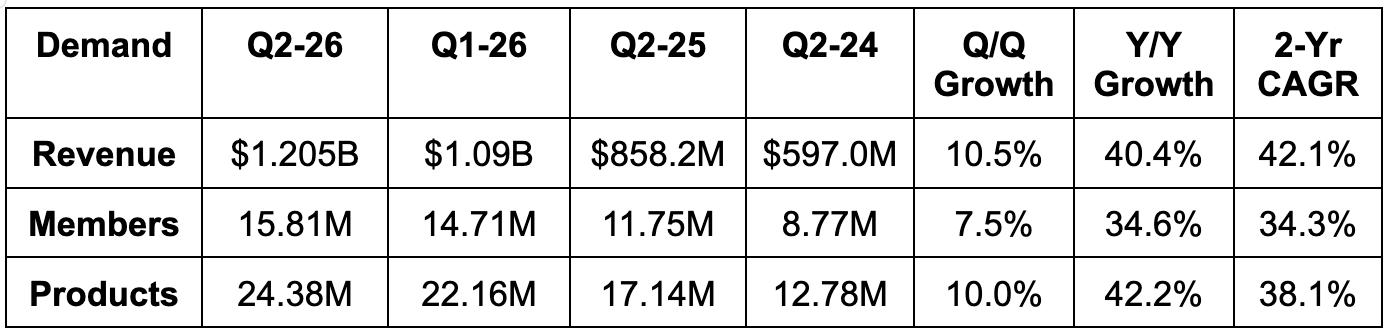
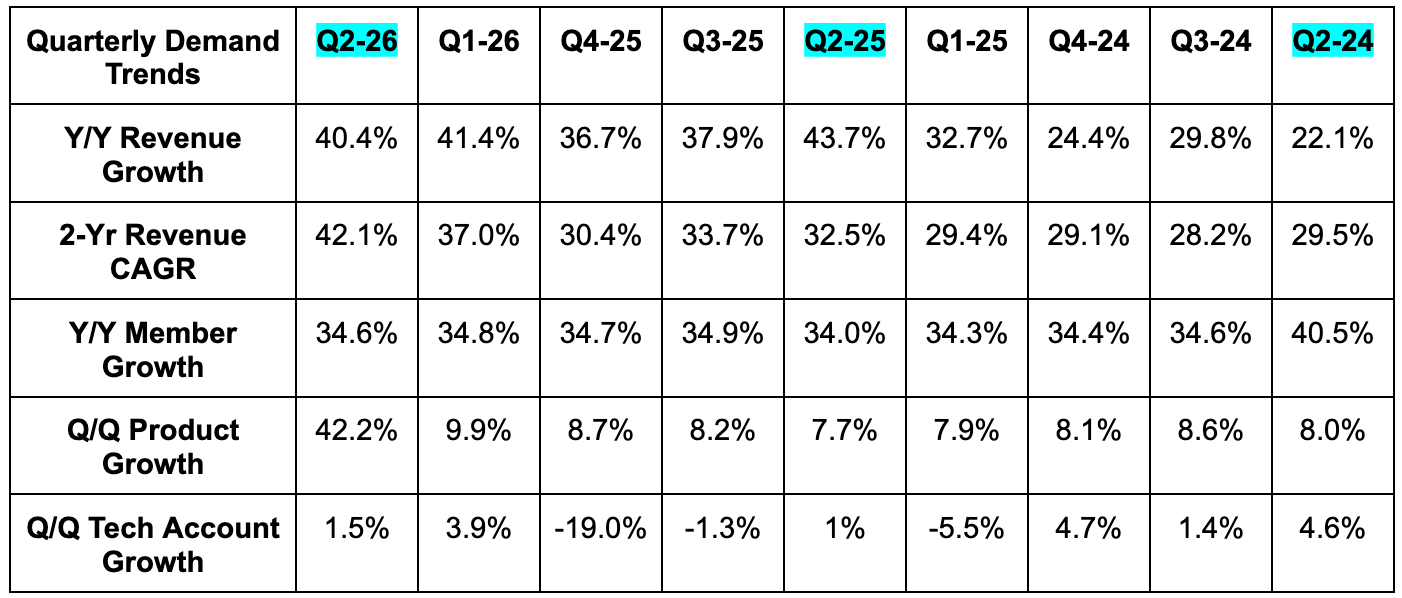
- Beat revenue estimate by 7.6% & beat guidance by 8%.
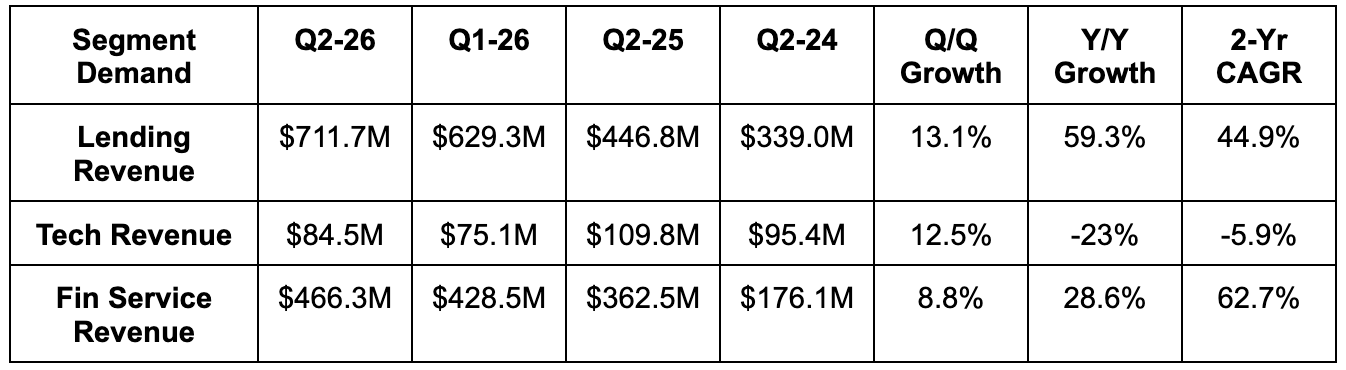
- Almost the entire beat came from lending revenue as SoFi takes advantage of its large capital ratio cushions and prioritizes balance sheet-funded lending over using partners. More on this later.
- Fee-based revenue was 39% of total revenue vs. around 43% last year. Tech segment headwinds from Chime moving off the platform last year impacted this. Fee-based revenue rose 38% Y/Y ex-Chime.
- Net interest income rose 52% Y/Y as they added more loans to the balance sheet and enjoyed a larger cost of funds decrease than the related average yield decrease.
- Technology revenue was about 1% ahead of expectations. Financial services revenue missed expectations as the aforementioned lending shift cannibalizes some of that segment’s demand.
- Cash Revenue was again roughly in line with reported revenue, showing fair value accounting bears that there’s absolutely nothing shady about SoFi’s accounting methods.
- Beat 15.6M total member estimate by about 210K.
- Beat 23.9M total product estimate by about 500K.
- The competitive environment was called stable.
c. Profits & Margins
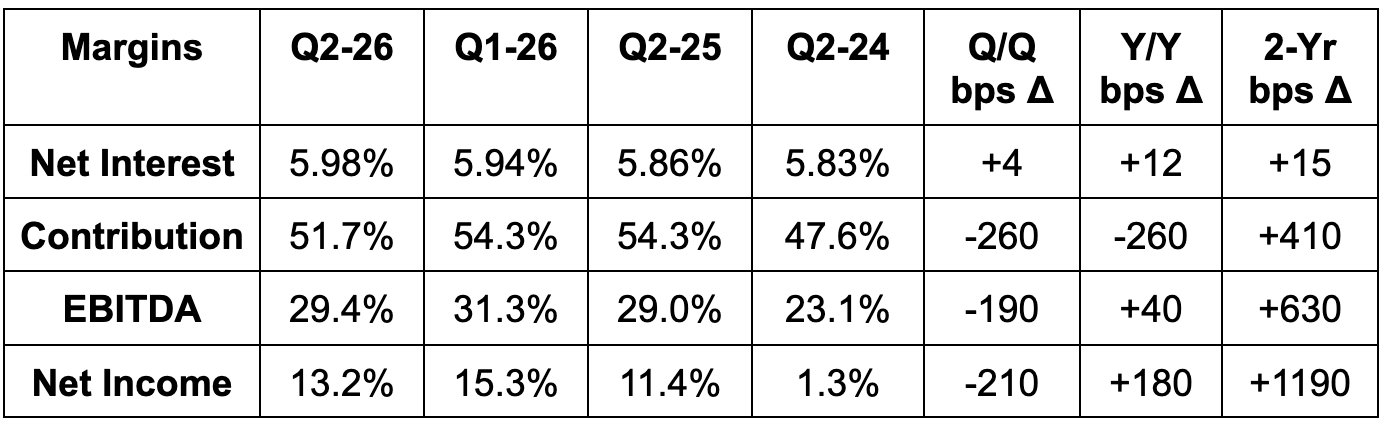
- Beat 5.83% net interest margin (NIM) estimates by 15 basis points (bps; 1 basis point = 0.01%).
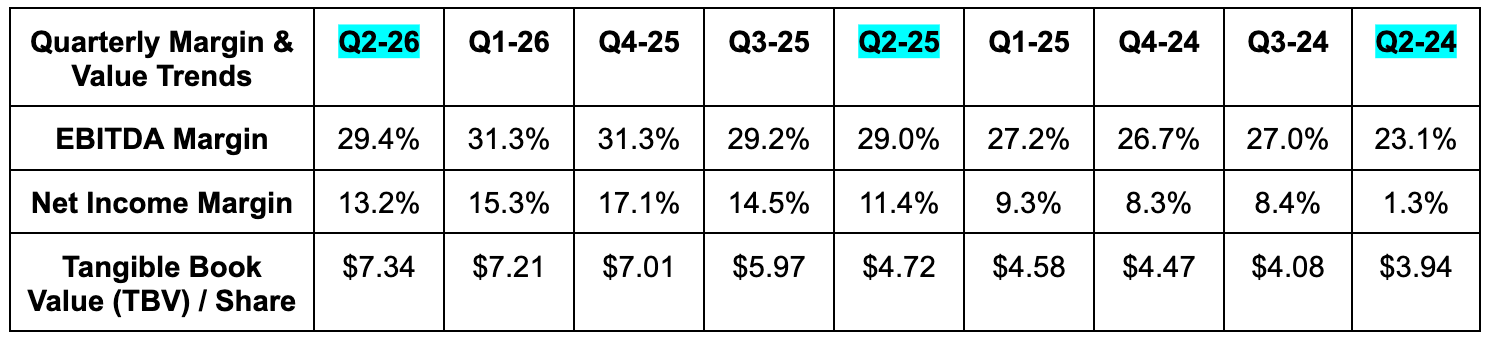
- Beat EBITDA estimate by 6% & beat guidance by 6.6%.
- Beat $0.11 EPS estimate by $0.01. Higher-than-expected taxes lowered EPS by half a penny.
- Beat contribution profit estimate by 2.3%.
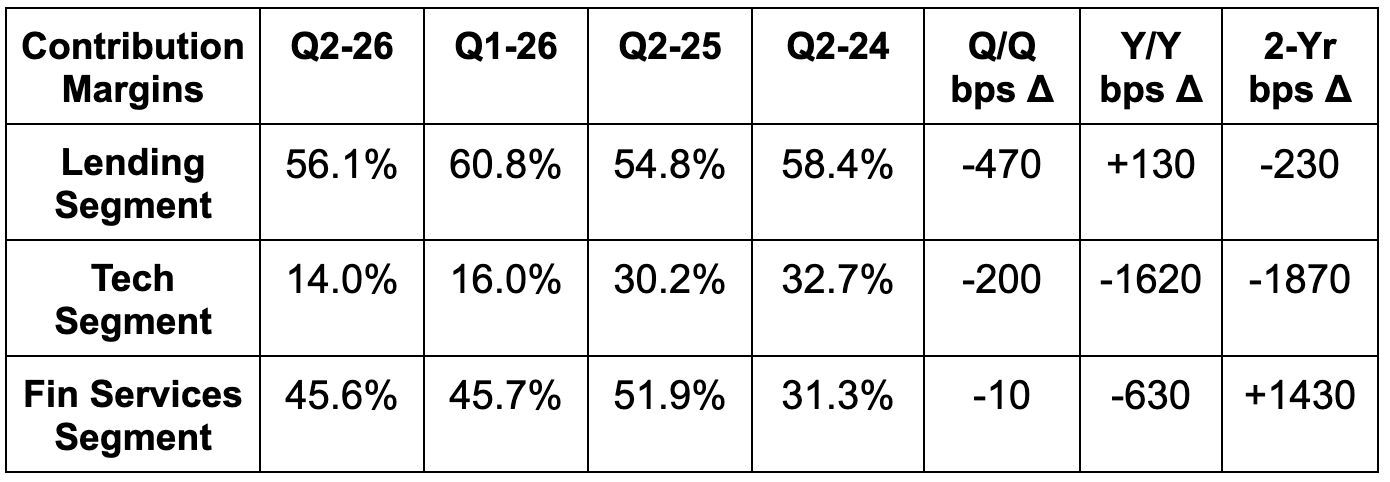
- Contribution margins were light for all 3 segments. Revenue beats allowed contribution dollars to outperform.
- Beat $7.28 tangible book value (TBV) per share estimate by $0.06.
d. Balance Sheet, Credit Health & Capital Market Access
Accounting Refresher:
As we work through this section, recall that net charge-off is a lagging credit indicator, while delinquency rates are more of a leading indicator.
SoFi also doesn’t practice current expected credit loss (CECL) accounting like most counterparts. They enlist an independent 3rd party auditor, highly conservative macro assumptions and overly harsh delinquent loan write-down standards to set fair value markings on loan pools every quarter. To avoid pent-up unrealized losses, markings and changes in fair value flow through the income statement every single quarter. It hedges away all of these fair value changes to eliminate the conflict of interest coming from unfairly propping it up. With this method, SoFi gains more loan transaction flexibility in accordance with strict GAAP accounting rules.
In this piece, we’ll provide detailed SoFi credit data that’s rich with tangible evidence pointing to their fair value markings being overly prudent if anything. Let’s dig in.